What Size Power Station Do I Need? A Simple Guide to Capacity and Power
What size power station do I need? The answer depends on more than the battery capacity printed on the box.. You need to consider the devices you want to run, how much power they use, how long you need them to operate and whether several devices will be running at the same time.
This guide explains how to work out what size power station you need for home backup, camping, caravanning, travel and everyday use. For a broader introduction to the different specifications and features to compare, see our portable power station buying guide.
Table of Contents
What Does “Size” Mean With a Portable Power Station?
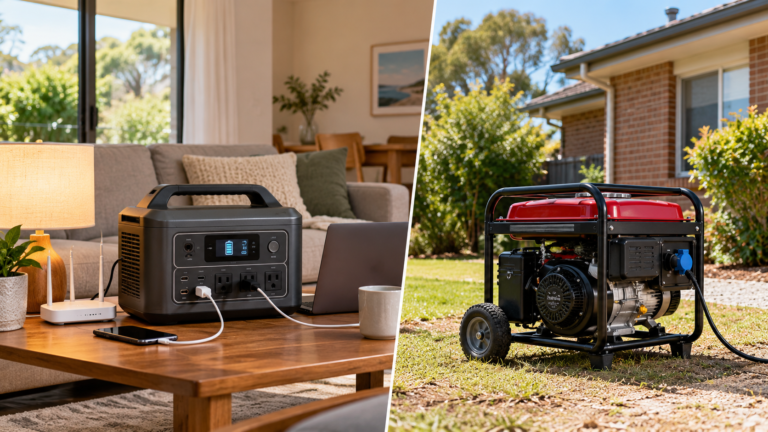
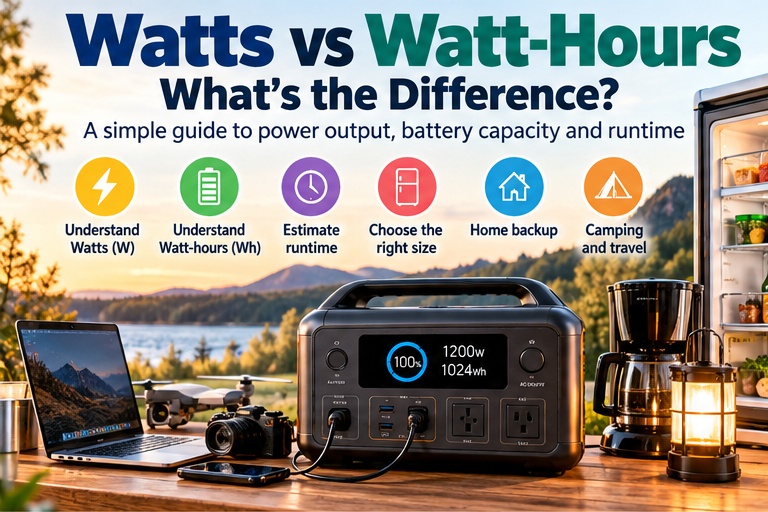
When people ask, “what size power station do I need?”, they are usually talking about two different specifications: battery capacity and power output. You need to consider both because they answer different questions.
Battery capacity is measured in watt-hours (Wh). It tells you how much energy the power station can store. In simple terms, a larger Wh rating generally means more stored energy is available to run your devices over a longer period.
Power output is measured in watts (W). It tells you how much electrical power the power station can supply to connected equipment at a given time. This is important because an appliance may need more power to operate than a small power station can provide, even when the battery capacity appears large enough.
For example, a power station with a 1,000Wh battery may store enough energy for a particular appliance to run for several hours, but that does not automatically mean it can operate every appliance. A high-wattage kettle, microwave or cooking appliance may require more continuous output than the power station can supply.
You also need to consider starting or surge power. Appliances containing motors or compressors, such as refrigerators and some pumps, can draw more power when they start than they use during normal operation. The power station therefore needs sufficient continuous output and, where required, sufficient surge capability.
The Australian Government’s energy guidance explains the difference between battery capacity and rated power output, which is useful when comparing energy storage systems.
The key point is simple: Wh helps determine how long a power station can provide energy, while W helps determine what equipment it can run. A suitable power station needs enough of both for your particular appliances and the amount of time you want to use them.
Before choosing a model, make a list of the devices you expect to run, check their rated power requirements and estimate how long you will use them. You can then work out the battery capacity and output you actually need instead of choosing a power station based on its Wh rating alone.
Start With What You Want to Power
The easiest way to work out what size power station you need is to start with the appliances and devices you actually want to use. Make a list of everything you expect to run and note its approximate power consumption in watts.
Think about your intended use first. A person who mainly wants to charge phones, tablets, laptops and lights will have very different requirements from someone who wants to run a refrigerator, television, cooking appliance or several devices at once.
Also consider whether the appliances will operate at the same time. For example, running a television, laptop, lights and Wi-Fi router together creates a larger instantaneous load than using each device separately.
Common devices to consider include:
Phones and tablets
Laptops and computer equipment
Wi-Fi routers and networking equipment
LED lights
Televisions
Refrigerators and freezers
CPAP machines
Kettles and coffee makers
Microwaves and toaster ovens
Fans and other small appliances
Check the manufacturer’s label, manual or product specifications for the actual power requirement of each appliance whenever possible. Do not rely solely on a general wattage estimate because two appliances that perform the same job can have quite different electrical requirements.
Once you have your list, identify which devices are essential and which are optional. This is particularly useful for camping, caravanning and blackout backup because it allows you to size the power station around your real requirements rather than paying for capacity you may never use.
The next step is to work out both the total power you may need at one time and the amount of energy you need over the period you want the power station to operate. These two calculations will help determine the power station’s required wattage and battery capacity.
How to Calculate the Battery Capacity You Need
Working out the battery capacity you need is mainly a matter of estimating how much energy your appliances will use over the period you want the power station to operate.
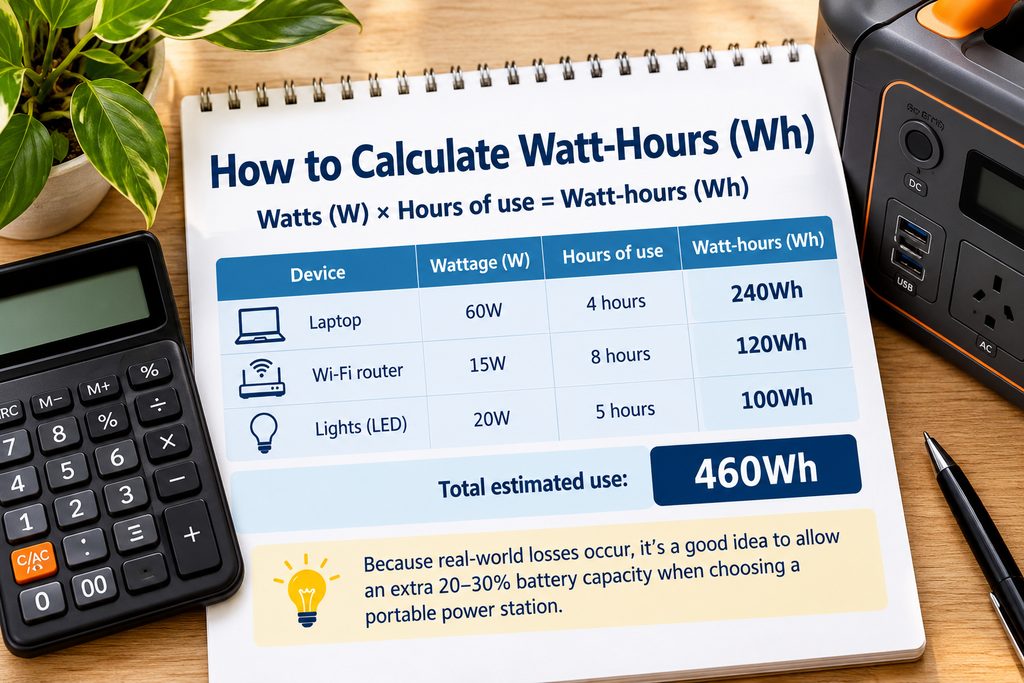
Battery capacity is measured in watt-hours (Wh). A simple starting calculation is:
Power in watts × operating time in hours = energy required in watt-hours
For example, if a device uses 100 watts and you want to run it for five hours:
100W × 5 hours = 500Wh
That gives you a theoretical energy requirement of 500Wh. In real use, you also need to allow for energy losses during power conversion and for the power station’s own operating requirements.
A better planning calculation is therefore to start with the energy your appliances require and then allow a margin rather than choosing a battery with exactly the same Wh rating.
For example, if your appliances are expected to use 500Wh and you allow for an illustrative 85% overall availability:
500Wh ÷ 0.85 = approximately 588Wh
A power station with a nominal capacity of around 600Wh would therefore provide a useful starting point for this example, although the actual usable energy will depend on the particular model, operating conditions and manufacturer specifications.
Calculate each appliance separately
When several appliances are involved, calculate the energy requirement for each one and then add the results together.
For example:
Television: 100W × 4 hours = 400Wh
Laptop: 60W × 5 hours = 300Wh
LED lighting: 20W × 5 hours = 100Wh
Wi-Fi router: 10W × 8 hours = 80Wh
Total estimated energy use:
400Wh + 300Wh + 100Wh + 80Wh = 880Wh
This does not mean you necessarily need an 880Wh power station. You should also consider conversion losses, the usable capacity specified by the manufacturer and whether all of the equipment will actually operate continuously for the full period.
Don’t size the battery from wattage alone
A common mistake is to look only at the wattage of an appliance. Watts tell you how much power the equipment needs while it is operating, whereas watt-hours tell you how much energy is required over time.
For example, a 1,000W appliance used for 15 minutes consumes:
1,000W × 0.25 hours = 250Wh
A lower-powered appliance running for many hours can therefore use a similar amount of stored energy.
Appliances that cycle on and off, such as refrigerators, also require more careful planning. Their average energy use may be substantially different from their running or starting wattage, so use the manufacturer’s energy information where it is available.
Allow some extra capacity
It is usually sensible to avoid selecting a power station that exactly matches your calculated requirement. Your actual usage may be higher than expected, and some stored energy is lost during conversion.
A modest capacity margin can also be useful when you want to add another device later or when operating conditions change.
The final calculation should therefore consider both the power output you need and the battery capacity you need. Once you know those two figures, you can start comparing power stations that meet your actual requirements.
Don’t Forget Starting Power
Battery capacity is only part of the sizing process. You also need to make sure the power station can supply enough instantaneous power when an appliance starts.
Some appliances use more power at startup than they use during normal operation. This is particularly important for equipment with motors or compressors, including refrigerators, freezers, pumps, fans and some tools.
For example, a refrigerator might have a relatively modest running power requirement but require a higher starting surge when its compressor switches on. A power station therefore needs enough continuous AC output to handle the normal load and enough surge or peak output to handle the startup requirement.
Heating appliances such as kettles, microwaves, toaster ovens and some cooking appliances generally do not have the same type of compressor startup surge, but they can have a high continuous power demand. A power station may have plenty of battery capacity yet still be unable to operate one of these appliances if its AC output is too low.
Always check the appliance manufacturer’s specifications where possible. Look for its rated power, maximum power and starting or surge requirement, and compare those figures with the power station manufacturer’s specifications.
Continuous power vs surge power
Continuous power is the amount of AC power the power station can supply during normal operation.
Surge power is the higher level of power the station may be able to provide for a short period when equipment starts or experiences a temporary increase in demand.
For example, a power station rated at 1,800W continuous output with a higher surge rating may be capable of operating an appliance that normally uses less than 1,800W but briefly requires additional power at startup. The exact suitability depends on the appliance and the manufacturer’s specifications.
Do not assume that a higher surge figure will make a power station suitable for every high-power appliance. The appliance’s actual starting requirements, the duration of the surge and the power station’s operating limits all matter.
Why starting power matters when choosing a size
When comparing power stations, think about two separate questions:
Can the power station supply enough watts to run the appliance?
Can it handle the appliance’s starting or peak demand?
Only after both questions have been answered should you consider whether the battery has enough watt-hours for the required runtime.
A power station with a large battery but insufficient output may not start an appliance at all. Conversely, a power station with adequate output but a relatively small battery may operate the appliance but run out of stored energy sooner than expected.
Checking both power output and battery capacity before buying will help you avoid choosing a unit that looks large enough on paper but cannot actually operate the equipment you intend to use.
What Size Power Station Is Best for Different Uses?
There is no single power station size that is right for everyone. The capacity you need depends on what you want to run, how much power those devices require, how long you need them to operate and whether several appliances will be used at the same time.
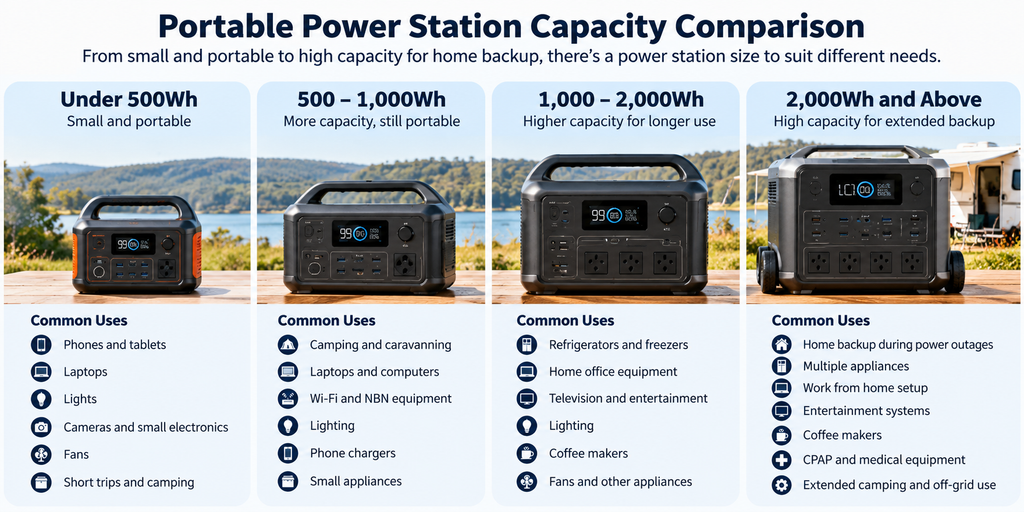
As a general guide, smaller power stations can be suitable for electronic devices and short trips, while larger-capacity models provide more stored energy for refrigeration, longer operating periods and higher-demand equipment.
Under 500Wh
Power stations under 500Wh are generally aimed at lighter electrical loads where portability is important. They can be useful for charging phones, tablets, cameras and other small devices, as well as operating small lights and similar low-power equipment.
This capacity range can suit day trips, occasional camping and emergency charging when you mainly need to keep communications devices operating.
Before choosing a small unit, check its AC output as well as its battery capacity. A relatively compact battery may have enough stored energy for electronic devices but may not provide sufficient output for appliances with higher power requirements.
500–1,000Wh
A 500–1,000Wh power station provides more flexibility while still being relatively portable. Depending on its output, it can be useful for laptops, televisions, lighting, networking equipment and other moderate-power devices.
This range can also suit camping and caravanning when your electrical needs are modest and you can recharge the unit regularly.
A 1,000Wh-class power station may provide considerably more stored energy than a smaller unit, but the exact runtime still depends on what you connect to it and how long each device operates.
1,000–2,000Wh
Power stations in the 1,000–2,000Wh range can provide a useful balance between capacity and versatility. They may be suitable for longer camping trips, caravanning, home-office equipment, refrigeration and selected household backup applications when the power station has sufficient output.
At this size, it becomes particularly important to consider both battery capacity and continuous AC output. A large battery does not automatically mean the power station can operate a high-wattage appliance.
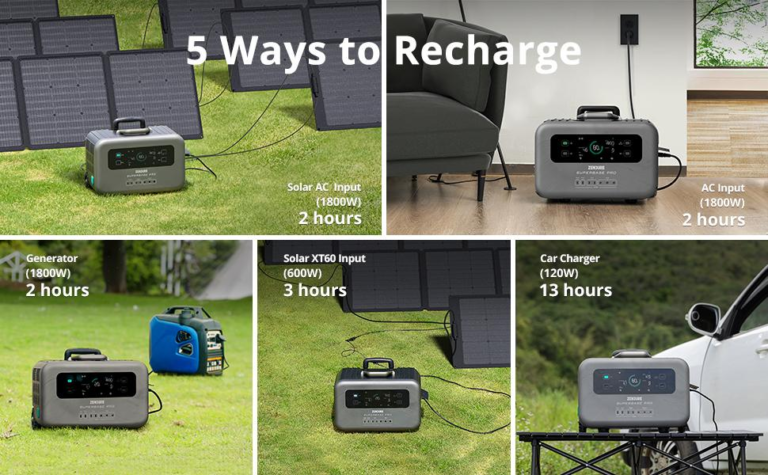
For longer periods away from mains electricity, also consider how the power station will be recharged. Solar input, vehicle charging or another compatible charging method can help replenish the battery between uses.
2,000Wh and Above
Power stations with 2,000Wh or more of battery capacity are designed for situations where you need more stored energy or expect to operate equipment for longer periods.
They can be useful for extended caravanning, larger backup requirements, higher energy consumption and selected higher-demand appliances, provided the station’s continuous and surge output are suitable for the equipment being used.
A larger battery can provide more operating time, but it also usually means a heavier and less easily transported unit. For this reason, capacity should be matched to your actual requirements rather than simply choosing the largest available model.
For extended off-grid use or repeated outages, also consider solar input, recharge speed, additional battery compatibility and how much energy you expect to consume each day.
How to choose between the size ranges
Use the capacity ranges as a starting point rather than a strict rule.
If you mainly need to charge small electronics, a compact unit may be sufficient. If you need to operate several devices, refrigeration or equipment for longer periods, a larger capacity may be more appropriate.
The final choice should be based on three calculations:
1. How much power do your appliances require at the same time?
2. How much battery energy do they require over the period you need them to run?
3. Can the power station be recharged when necessary?
Once you know those requirements, compare power stations by their Wh capacity, continuous output, surge capability, charging options and intended use rather than choosing one from battery capacity alone.
What Size Power Station Do I Need for a Refrigerator?
A refrigerator can be powered by a portable power station, but choosing the right size requires more than looking at the refrigerator’s average running wattage.
The first requirement is continuous AC output. The power station must be able to supply enough power for the refrigerator while the compressor is operating.
The second requirement is starting or surge power. A refrigerator compressor can require a higher amount of power when it starts than it uses during normal operation. The power station therefore needs enough surge capability to handle that temporary increase.
Check the refrigerator’s specifications
Before choosing a power station, check the refrigerator’s energy label, manufacturer’s specifications or owner’s manual for information about its electrical consumption.
Look for:
Rated or running power
Maximum or starting power, where provided
Energy consumption over time
The energy-consumption figure can be particularly useful because a refrigerator compressor normally cycles on and off rather than operating continuously at its maximum running power.
For example, a refrigerator that averages a relatively low power consumption over several hours may use much less stored energy than you would calculate by assuming its maximum running wattage continues constantly.
Battery capacity matters for refrigerator runtime
Once you know the refrigerator’s expected energy consumption, you can estimate how much battery capacity you need.
A simple calculation is:
Power consumption in watts × operating time in hours = watt-hours required
However, refrigerator consumption is not usually constant, so this calculation should be treated as an estimate. Real-world runtime also depends on the refrigerator, ambient temperature, how often the door is opened, the condition of the appliance and the efficiency of the power station.
The power station itself also consumes some energy, and there are losses when battery energy is converted to AC power.
Choosing the power station output
Do not choose a refrigerator power station based on battery capacity alone.
A unit may have a large battery but still be unsuitable if its inverter cannot provide enough continuous power or handle the refrigerator’s starting demand.
For a refrigerator, check the power station’s:
Continuous AC output
Surge or peak output
Battery capacity in Wh
Charging options
Manufacturer’s guidance on motor-driven or compressor loads
For longer outages, also consider how you will recharge the power station. Solar charging, mains charging when electricity becomes available and compatible vehicle charging can all be useful depending on the power station.
Allow for longer outages
If you need refrigeration during an extended blackout, consider more than just the first few hours of runtime.
A larger battery can provide more stored energy, while solar charging may help replenish that energy during the day. Keeping the refrigerator closed as much as practical can also reduce unnecessary cooling losses.
For extended backup, it can be useful to prioritise the refrigerator as an essential load and avoid running high-wattage appliances such as kettles, microwaves or cooking equipment at the same time unless the power station has sufficient output and you have enough stored energy.
The practical rule
The right refrigerator power station needs to satisfy three requirements at the same time:
Enough continuous output to run the refrigerator.
Enough surge capability to handle compressor startup.
Enough usable battery capacity to provide the required runtime.
Check the exact refrigerator specifications before purchasing rather than relying on a general wattage estimate. The same approach should be used for freezers and other appliances that contain compressors or motors.
What Size Power Station Do I Need for a Home Office?
A home office usually has more predictable electricity requirements than appliances such as refrigerators because many of the devices are electronic and have relatively steady power consumption.
The equipment you may need to keep operating can include:
Desktop computer or laptop
One or more monitors
Wi-Fi router and networking equipment
NBN or other internet equipment
Phone and device chargers
Desk lamp
Speakers or other small peripherals
Start by checking the rated power of each device and estimate how many hours you expect to use it. Then calculate the approximate watt-hours required for the period.
For example, a simple setup might look like this:
Laptop: 60W × 6 hours = 360Wh
Monitor: 40W × 6 hours = 240Wh
Wi-Fi equipment: 15W × 8 hours = 120Wh
Lighting: 10W × 6 hours = 60Wh
This gives an estimated total of:
360Wh + 240Wh + 120Wh + 60Wh = 780Wh
That is a theoretical energy requirement. In actual use, you also need to allow for power conversion losses and the fact that equipment may not operate at its rated maximum power continuously.
A lower-power home office using a laptop and one monitor may therefore require substantially less battery capacity than a setup using a desktop computer, multiple large monitors and additional equipment.
Consider how long you need to work
Runtime is particularly important if you are using a power station during a blackout or while working away from mains electricity.
A power station with enough output to run your equipment may still provide only a limited working period if its battery capacity is too small.
If you need several hours of uninterrupted work, calculate the energy requirements of all the equipment you expect to use during that period and add a reasonable margin for losses and changes in usage.
Check the power station output
Home-office equipment is generally easier to size when compared with high-demand heating appliances, but you should still check the power station’s continuous AC output.
Add together the devices you expect to have operating at the same time and compare that total with the power station’s continuous output rating.
Also consider any equipment that has a higher startup requirement.
Keep communications equipment running
For many people, maintaining internet and phone access during an outage is one of the main reasons for having a home-office backup system.
A relatively small amount of battery capacity may be enough to keep networking equipment operating for many hours, especially when the computer and monitor are switched off when they are not required.
For longer outages, consider prioritising the equipment you actually need. You may be able to save considerable stored energy by running the router continuously while using the computer and monitor only when necessary.
Choosing a practical size
For a light home-office setup consisting mainly of a laptop, router, phone chargers and lighting, a smaller power station may be sufficient.
A desktop computer, multiple monitors and longer working periods can require considerably more capacity.
The right choice depends on your actual equipment, its power consumption and how long you need to operate it. Calculate those requirements first, then choose a power station with sufficient continuous output, battery capacity and charging capability rather than relying on the Wh rating alone.
What Size Power Station Do I Need for Camping?
Camping power requirements vary considerably depending on how you camp, how long you stay away from mains electricity and which appliances you want to use.
A simple camping setup for phones, lights and a laptop may need only a relatively small power station. A larger setup with a television, refrigerator, cooking equipment and several devices operating each day will require substantially more battery capacity and output.
Before choosing a power station for camping, make a list of the equipment you expect to use and estimate both its power requirement in watts and the number of hours you expect to use it.
Common camping loads can include:
Phones and tablets
LED lights
Fans
Laptops
Televisions
Portable refrigerators or fridge-freezers
Camera and other electronic equipment
Small cooking or food-preparation appliances
The total battery capacity required will depend on how much energy these devices use throughout the day.
Consider your daily energy use
For example, imagine a camping setup using:
LED lights: 20W × 5 hours = 100Wh
Laptop: 60W × 4 hours = 240Wh
Television: 80W × 3 hours = 240Wh
Phone charging: 10W × 3 hours = 30Wh
The estimated daily energy requirement would be:
100Wh + 240Wh + 240Wh + 30Wh = 610Wh
This is a simplified calculation. Actual energy use will vary, and you should allow for power conversion losses and changes in how long each appliance is used.
Think about your camping style
A weekend camper who mainly wants to keep phones charged and run a few lights may not need a large-capacity system.
Someone staying off-grid for several days may need substantially more stored energy, particularly if they also want refrigeration, entertainment, communications equipment or other appliances.
Caravanning can also increase electrical requirements because you may want to operate several devices regularly rather than simply charging a few small electronics.
Solar charging can extend your stay
If you are camping away from mains electricity for several days, consider how the power station will be recharged.
Compatible solar panels can help replenish stored energy during daylight hours, depending on available sunlight, panel positioning and the power station’s solar-input limits.
When comparing solar-capable systems, check the manufacturer’s maximum solar input and the electrical requirements of the panels. More solar input can allow faster charging when conditions are suitable, but actual solar production varies with weather, shading, panel orientation and other conditions.
Don’t forget inverter output
Battery capacity is not the only specification that matters when camping.
A power station might have enough stored energy for your planned trip but still be unable to operate a high-wattage appliance if its AC output is too low.
Add together the appliances you expect to use at the same time and compare that total with the power station’s continuous AC output.
Also check the starting or surge requirements of appliances containing compressors or motors, such as portable refrigerators and some fans.
Match the power station to the trip
For light camping, a compact power station may provide enough capacity for small electronics and lighting.
For longer trips or more demanding equipment, a 1,000Wh-class system or larger may provide greater flexibility.
For extended off-grid camping or caravanning, larger-capacity systems can provide more stored energy, but they may also be heavier and less convenient to transport.
The most practical approach is to calculate your expected daily energy use, consider the appliances you need to operate simultaneously and then allow enough capacity to cover your expected runtime and charging conditions.
Plan for several days without mains power
When camping for several days, think about the entire energy cycle rather than the first day’s usage.
Estimate how much energy you expect to consume each day, consider how much energy your solar panels may realistically put back into the battery and allow for periods of cloudy weather or reduced solar production.
Having more battery capacity can provide a useful buffer when charging conditions are poor. Reducing unnecessary loads can also extend the time between recharges.
The right camping power station is therefore the one that provides enough output for your appliances, enough battery capacity for your expected use and a practical way to recharge when you are away from mains electricity.
What Size Power Station Do I Need for a Blackout?
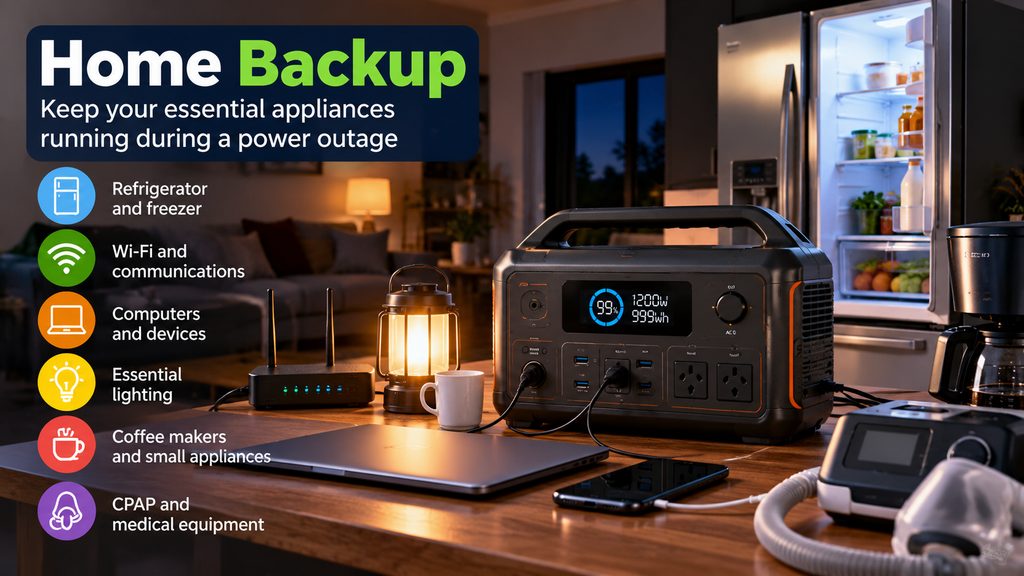
For blackout backup, start by identifying the appliances and devices that are genuinely essential. You do not necessarily need enough stored energy to run everything in the home.
For a more detailed look at choosing backup capacity for essential household appliances, see our portable power station home backup guide.
Your priority might include:
Refrigerator or freezer
Wi-Fi router and communications equipment
Phones and other essential devices
Essential lighting
Computer equipment
Medical or other essential electrical equipment
Once you know what you need to keep operating, estimate the power consumption of each device and how long you expect to use it.
Decide what needs to run continuously
Some equipment may need to operate continuously, while other devices can be switched on only when required.
A Wi-Fi router may need to remain operational for communications, while a television, computer or other entertainment equipment might only be used for a few hours.
Reducing unnecessary loads can significantly extend the available battery runtime.
For example, keeping a router running continuously may use relatively little energy compared with operating a high-power appliance for several hours.
Allow for refrigerator startup
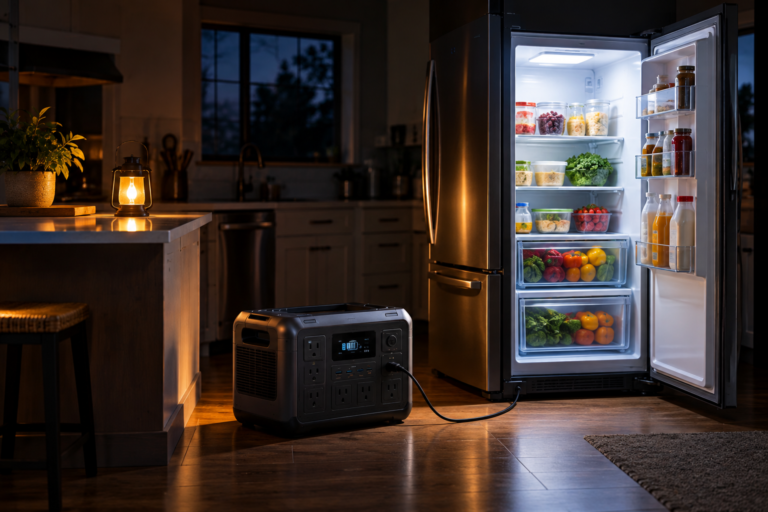
Refrigerators are often one of the most important appliances during a blackout, but they require particular attention when choosing a power station.
The unit must have sufficient continuous AC output to run the refrigerator and sufficient surge capability to handle the compressor starting.
Battery capacity is also important because refrigeration may need to continue for many hours.
Check the refrigerator manufacturer’s specifications where possible rather than relying on a general wattage estimate.
Calculate the expected energy requirement
Once you have identified your essential loads, calculate their approximate energy requirements.
For example:
Refrigerator: estimated 500Wh per day
Wi-Fi router: 10W × 24 hours = 240Wh
LED lighting: 20W × 5 hours = 100Wh
Phone charging: 20Wh
Laptop: 60W × 4 hours = 240Wh
The simplified total would be:
500Wh + 240Wh + 100Wh + 20Wh + 240Wh = 1,100Wh
This is an example only. Actual energy consumption can vary considerably between appliances and operating conditions.
You should also allow for the power station’s conversion losses and the fact that the nominal battery capacity is not necessarily the same as the amount of energy available at the AC outlets.
Consider how long the blackout may last
The required capacity changes depending on whether you are preparing for a short outage or a longer interruption.
For a short blackout, a smaller power station may be sufficient if you only need to keep essential electronics, lighting and communications equipment running.
For a longer outage, you may need more battery capacity and a way to recharge the power station.
Solar charging can help extend the available runtime during daylight hours when compatible panels and suitable sunlight are available.
You do not need to power the entire house
A portable power station is generally used to supply selected appliances directly from its own outlets.
Do not attempt to connect a portable power station to household wiring by plugging it into a standard wall outlet. Supplying household circuits requires appropriate equipment and installation by a qualified electrician.
For many blackout situations, it is simpler to identify your essential devices and connect those directly to the power station.
Choose capacity based on your priorities
A useful way to approach blackout sizing is to divide your electrical loads into priorities.
Priority 1: Refrigerator, essential communications, medical equipment and essential lighting.
Priority 2: Laptop or computer equipment and other important electronics.
Priority 3: Television, entertainment equipment and non-essential appliances.
This approach allows you to preserve stored energy for the equipment that matters most.
A larger power station is not automatically the right solution. The practical choice depends on the amount of power your essential appliances require, how long you need them to operate and whether you have a reliable way to recharge the battery.
For longer outages, consider battery capacity, continuous output, surge capability and charging options together.
The goal is to have enough usable energy for your essential loads without selecting a system that is substantially larger, heavier or more expensive than your actual requirements.
Should I Choose a Larger Power Station?
Choosing a larger power station can provide additional battery capacity and more output, but bigger is not always necessary.
The right size depends on your actual appliances, how long you need them to operate and how you plan to recharge the system.
A larger power station may be useful when you regularly operate several devices at once, need longer runtime or want additional capacity for future equipment.
When a larger capacity can make sense
A larger power station may be worth considering when you need to operate:
A refrigerator or freezer for extended periods
Multiple electronic devices at the same time
A television, computer and networking equipment together
Higher-powered appliances
Several days of off-grid equipment use
Essential appliances during longer power outages
Extra battery capacity can also provide a useful buffer when actual energy consumption is higher than expected or when solar charging is reduced by cloudy weather.
Bigger capacity also means greater size
A larger battery generally means a larger and heavier power station.
That may not matter when the unit is being kept at home or inside a caravan, but weight and physical size can become important when you need to move the unit regularly.
Before buying, consider where the power station will be stored, how often you will move it and whether you need to transport it in a vehicle.
Don’t pay for capacity you don’t need
There is little benefit in choosing a substantially larger power station simply because it has a higher Wh rating.
If your normal loads are relatively small, a large battery may add unnecessary weight, cost and charging requirements.
Instead, calculate your expected energy use and choose a model that provides enough battery capacity and output with a reasonable margin.
Think about future needs
Future requirements can be a reason to allow some additional capacity.
For example, you may initially plan to run a laptop, television and lighting but later add a refrigerator, additional equipment or solar panels.
A little extra capacity can provide flexibility, but the decision should still be based on realistic future use rather than buying the largest system available.
Compare the complete system
When considering a larger power station, look beyond the battery capacity.
Compare:
Battery capacity in Wh
Continuous AC output
Surge or peak output
Solar charging input
Other charging options
Weight and physical dimensions
Expansion battery compatibility
Available outlets and connectors
A system with a smaller battery but faster and more flexible charging may suit your needs better than a much larger battery that is difficult to recharge or transport.
A practical rule for sizing
Choose the smallest capacity that comfortably covers your calculated energy requirements, provides sufficient power for your highest-demand appliance and gives you enough margin for real-world conditions.
Move to a larger system when you genuinely need more runtime, higher output, additional expansion or greater off-grid capability.
The goal is not simply to buy the biggest power station. The goal is to choose a system that provides the right combination of battery capacity, power output, portability and charging capability for the way you intend to use it.
A Simple Power Station Sizing Checklist
Before choosing a portable power station, work through the following checklist. It will help you identify the capacity and output you actually need before comparing specific models.
1. List the devices you need to power
Write down every appliance or device you expect to use.
Include essential equipment as well as items you would like to use during camping, caravanning, travel or a blackout.
2. Check the wattage of each device
Find the manufacturer’s rated power requirement wherever possible.
Record the wattage in W for each device.
Do not rely solely on general online estimates when the manufacturer’s information is available.
3. Identify starting or surge requirements
Check whether any equipment has a higher startup requirement.
This is particularly important for refrigerators, freezers, pumps, fans, power tools and other equipment containing motors or compressors.
4. Work out which devices will run together
Add the wattage of appliances that may operate at the same time.
This gives you an estimate of the simultaneous power load your power station needs to supply.
5. Estimate how long each device will run
For each appliance, estimate the number of hours you expect to use it.
Then calculate:
Watts × hours = watt-hours
Repeat the calculation for each device and add the results together.
6. Allow for real-world losses
Your calculated energy requirement is an estimate.
Battery energy is lost during conversion to AC power, and actual appliance consumption can vary.
Allowing a reasonable margin can help prevent the battery from being sized too closely to the theoretical requirement.
7. Check the power station’s continuous output
Make sure the power station can supply enough continuous AC power for the appliances you expect to operate together.
A large Wh capacity does not automatically mean the unit can run a high-wattage appliance.
8. Check the surge capability
Where appliances have a startup surge, compare their starting requirements with the power station’s surge or peak output.
Do not assume that a high surge figure automatically makes a power station suitable for every appliance.
9. Consider how you will recharge it
For camping, caravanning and extended off-grid use, consider whether you will recharge from:
Mains electricity
Solar panels
A vehicle or compatible DC source
Another supported charging method
The best option depends on where and how you will use the system.
10. Consider weight and portability
A larger battery normally means a larger and heavier unit.
Think about where the power station will be stored and whether you need to move it regularly.
11. Think about future requirements
Consider whether you may add more appliances or need longer runtime later.
A modest amount of additional capacity can provide flexibility, but avoid selecting a substantially larger system without a practical reason.
12. Compare the complete specifications
Before buying, compare:
Battery capacity
Continuous AC output
Surge capability
Solar input
Charging speed and options
Weight and dimensions
Available outlets
Expansion or additional battery options
Manufacturer support and specifications
Final sizing check
Before making your purchase, you should be able to answer these four questions:
What appliances do I need to run?
How many watts do they require at the same time?
How many watt-hours do I need over my required operating period?
How will I recharge the power station?
Once you can answer those questions, you can compare power stations based on your actual requirements rather than simply choosing the largest battery capacity.
Final Thoughts
Choosing the right power station size starts with understanding what you actually need to power.
Battery capacity, measured in watt-hours (Wh), helps determine how much stored energy is available. Power output, measured in watts (W), determines how much power the unit can supply to your appliances at one time.
Start by making a list of the devices you expect to use. Check their power requirements, estimate how long they will operate and identify which appliances may run simultaneously.
Remember to check starting or surge requirements for equipment such as refrigerators, freezers, pumps and other motor-driven appliances. A power station can have plenty of battery capacity but still be unable to operate an appliance if its continuous or surge output is insufficient.
For longer trips, caravanning and blackout backup, also consider how the power station will be recharged. Solar panels, mains electricity and compatible vehicle charging can all be useful depending on your circumstances and the specifications of the system.
A larger power station is not automatically the right choice. More capacity can provide longer runtime and greater flexibility, but it can also mean greater weight, size and cost.
The most useful approach is to calculate your expected power and energy requirements first, then compare power stations against those requirements.
You can then explore our portable power stations in Australia guide for further comparisons by capacity, output and intended use.
Before purchasing, check the manufacturer’s current specifications for the exact model and configuration you are considering, including battery capacity, continuous output, surge capability, charging options, weight, outlets and expansion options.
By sizing the system around your actual needs rather than choosing by battery capacity alone, you can make a more informed decision and avoid paying for capacity or output you may never use.