Portable Power Station Buying Guide: How to Choose the Right One
Choosing a portable power station can be confusing when you’re faced with different battery capacities, wattage ratings, charging options and features. The right model depends on what you need to power, how long you need it to run and where you plan to use it.
This portable power station buying guide explains the key specifications in simple terms and shows you what to consider before choosing a power station for home backup, camping, caravanning, travel or everyday use.
You can also explore our Best Portable Power Stations guide for a closer look at available options.
Table of Contents
What Is a Portable Power Station?
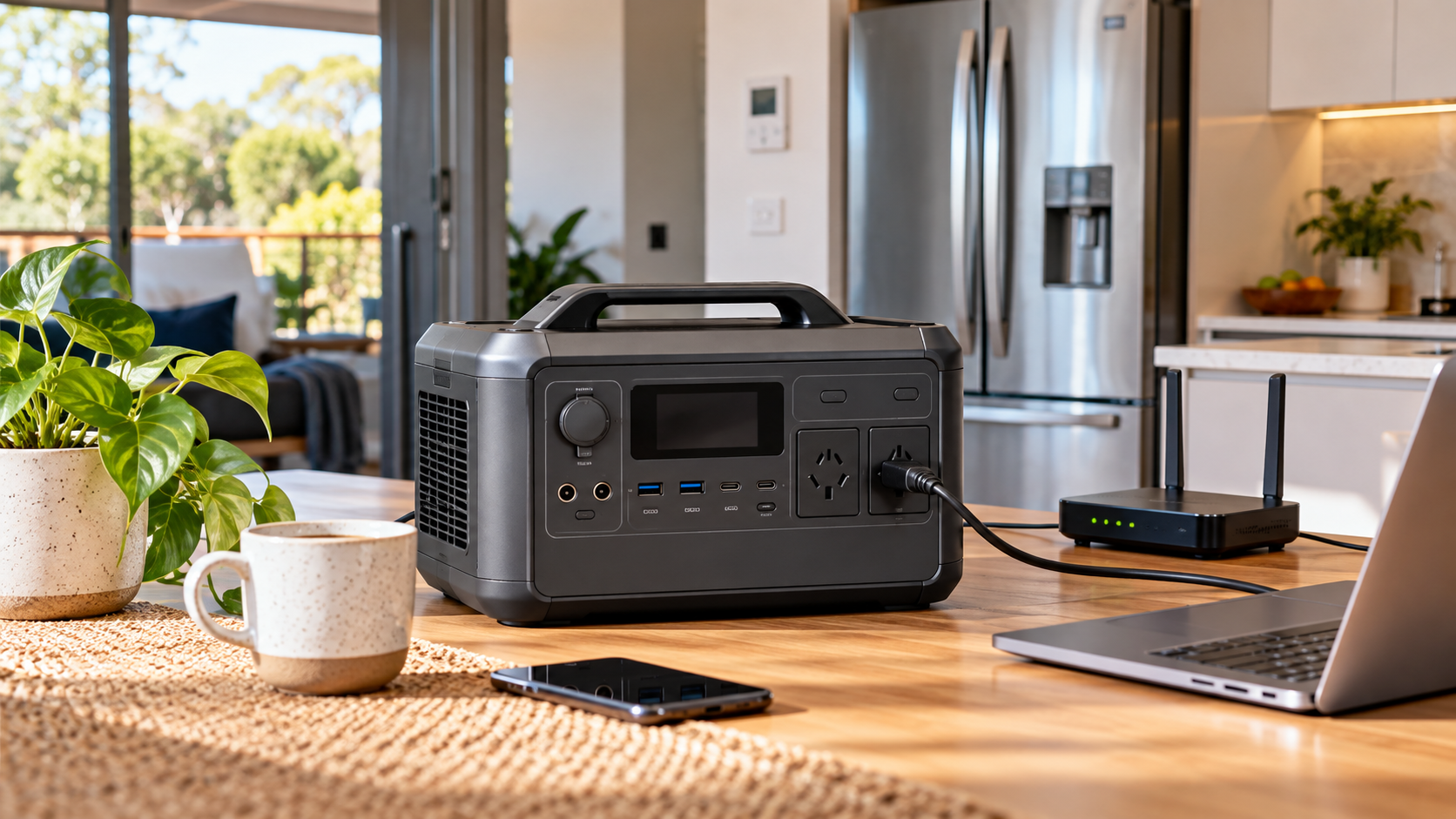
A portable power station is a rechargeable battery system that can supply electricity to appliances, electronics and other devices without being connected directly to mains power.
Unlike a small power bank designed mainly for phones and other USB devices, portable power stations can provide multiple types of output, including AC power, USB connections and DC outputs. Many models can also be recharged from mains electricity, a vehicle or solar panels.
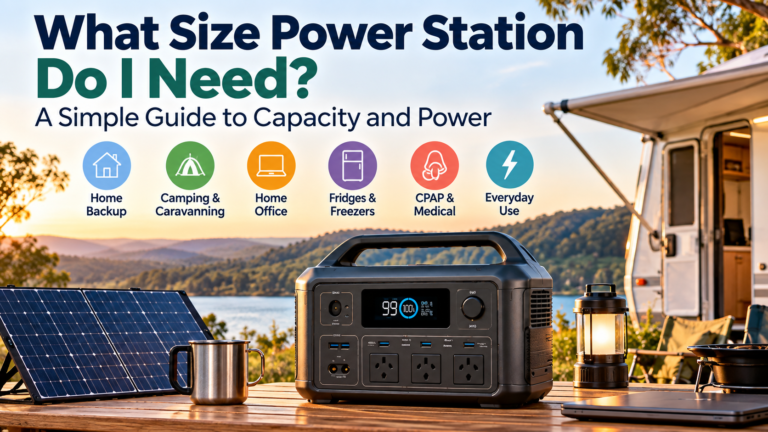
The best size depends on what you want to run, how much power those devices require and how long you need backup power.
Portable Power Station Buying Guide: What to Consider
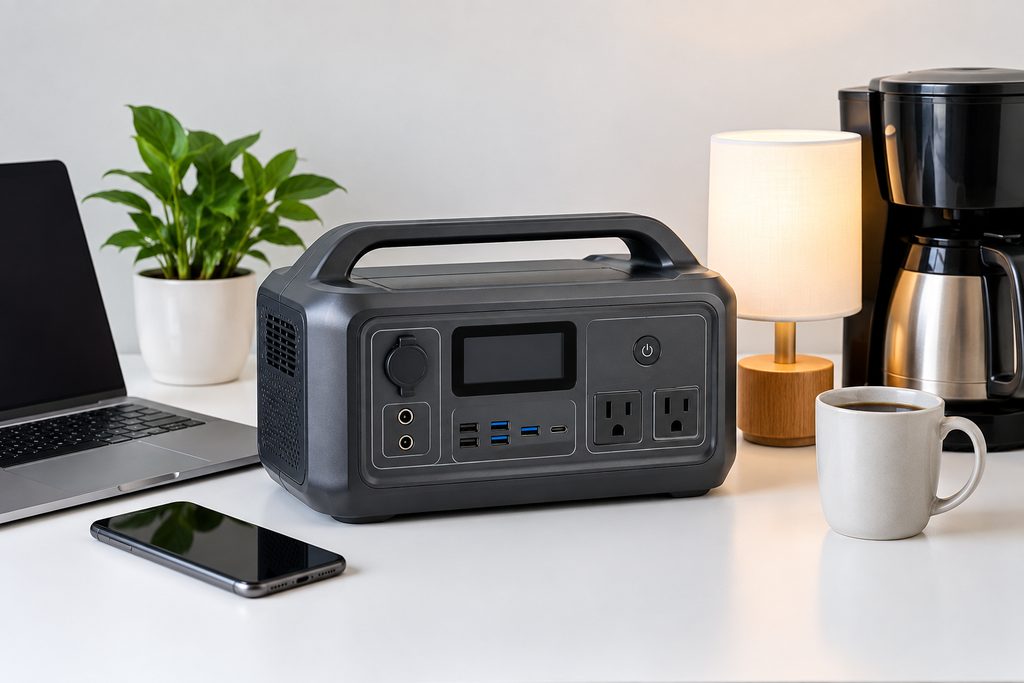
Before choosing a model, consider these important factors:
1. Battery Capacity
Battery capacity is usually measured in watt-hours (Wh). It gives you an indication of how much energy the battery can store.
A higher Wh rating generally means more stored energy, although actual runtime depends on the device being powered, conversion losses and the way the power station is used.
2. Continuous Power Output
Power output is normally measured in watts (W). It indicates how much power the power station can supply to connected devices.
Check the continuous output rating when determining whether a power station can operate a particular appliance.
3. Surge or Peak Output
Some appliances require more power when they start than they use during normal operation. This is particularly relevant to equipment containing motors or compressors.
Check both the continuous and surge output ratings before connecting an appliance with a high starting load.
4. Battery Chemistry
Portable power stations use different battery technologies. Lithium iron phosphate (LiFePO4) batteries are commonly used in newer power stations and are known for their long cycle life and stable chemistry.
Battery chemistry is one factor to consider alongside capacity, warranty, charging performance and the manufacturer’s specifications.
For additional information about lithium-ion battery safety, see the ACCC Product Safety lithium-ion batteries guide.
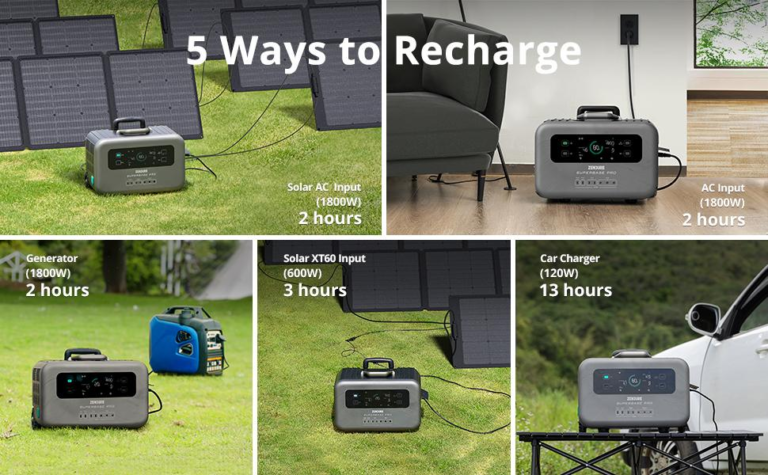
5. Charging Options
Consider how you will recharge the power station. Depending on the model, charging options may include mains electricity, solar panels and vehicle charging.
If you plan to use a power station while camping or travelling, solar and vehicle charging may be particularly useful.
6. Portability
Consider the size and weight of the unit before buying. A large-capacity power station may provide more stored energy but can be difficult to move.
If you regularly travel, camp or caravan, handles, wheels and overall weight can be just as important as battery capacity.
7. Number and Type of Outputs
Check which connections you actually need. Depending on the model, outputs may include AC outlets, USB-A, USB-C and DC connections.
Think about the devices you are likely to use rather than simply choosing a model with the greatest number of ports.
How Much Power Do You Need?
- Refrigerator or freezer
- Wi-Fi router and NBN equipment
- Laptop or computer
- Phone chargers
- Television
- Lights
- CPAP equipment
- Coffee maker
- Camping equipment
- Other essential devices
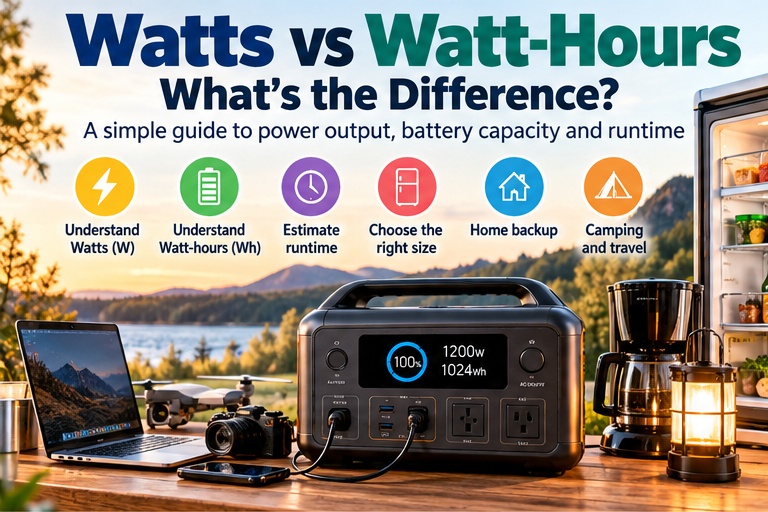
Understanding Watts and Watt-Hours
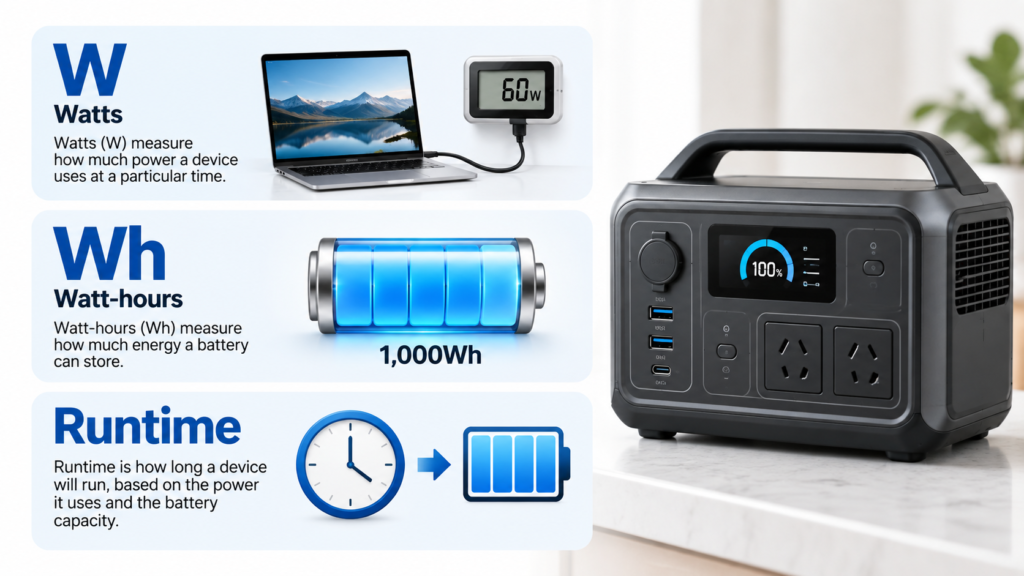
Watts and watt-hours describe two different things.
Watts (W) describe power — how much electricity a device requires at a particular time.
Watt-hours (Wh) describe energy capacity — how much energy a battery can store.
For example, a device using 100 watts continuously for one hour would theoretically use 100 watt-hours of energy. Real-world runtime from a portable power station will usually be lower than a simple calculation because of conversion losses and other factors.
For a more detailed explanation, see our guide to Watts vs Watt-Hours.
Choosing the Right Battery Capacity
Portable power stations are available in a wide range of capacities. Smaller units can be useful for phones, laptops, lights and other lower-power devices, while larger systems can provide considerably more stored energy for home backup and higher-demand equipment.
Capacity should be matched to your intended use rather than choosing the largest battery available.
Consider both the devices you need to operate and the amount of time you want them to run.
Under 1,000Wh
Smaller-capacity power stations can be suitable for portable use, camping, travel and charging smaller electronics.
1,000–2,000Wh
Mid-range power stations can provide a balance between capacity and portability and may be suitable for a wider range of household, camping and backup applications.
2,000Wh and Above
Larger-capacity systems can provide more stored energy for extended backup requirements and higher-energy appliances, although they are generally larger and heavier.
Expandable Power Stations
Some systems allow additional batteries to be connected to increase total storage capacity. This can be useful when longer backup periods are required.
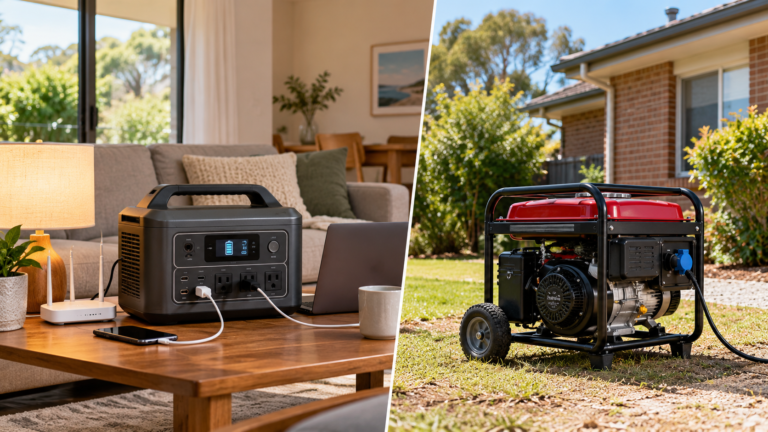
Portable Power Stations for Home Backup
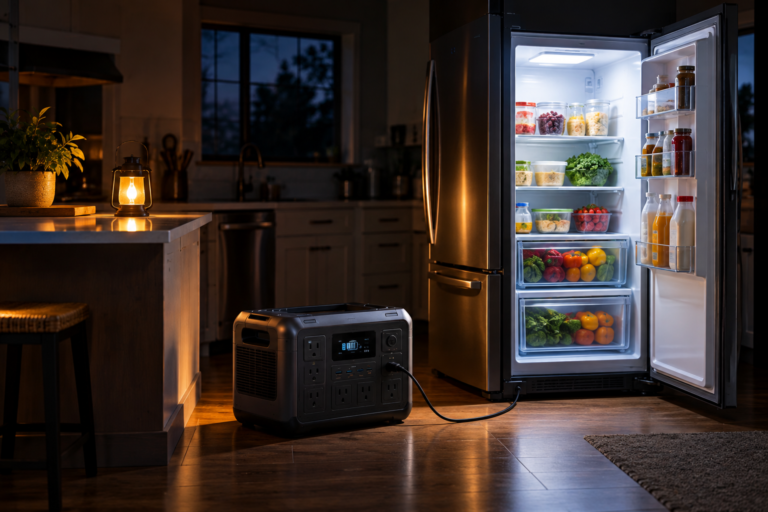
A portable power station can provide backup electricity for selected essential devices during a blackout or power interruption.
The devices you prioritise will determine the capacity and output you need. Common examples include refrigerators, freezers, Wi-Fi equipment, phones, laptops, lights and selected medical or electrical equipment.
Before purchasing, calculate the approximate power requirements of the devices you want to keep operating and consider how long you need backup power.
For more information, see our guide to Home Backup & Blackouts.
Portable Power Stations for Camping and Caravanning
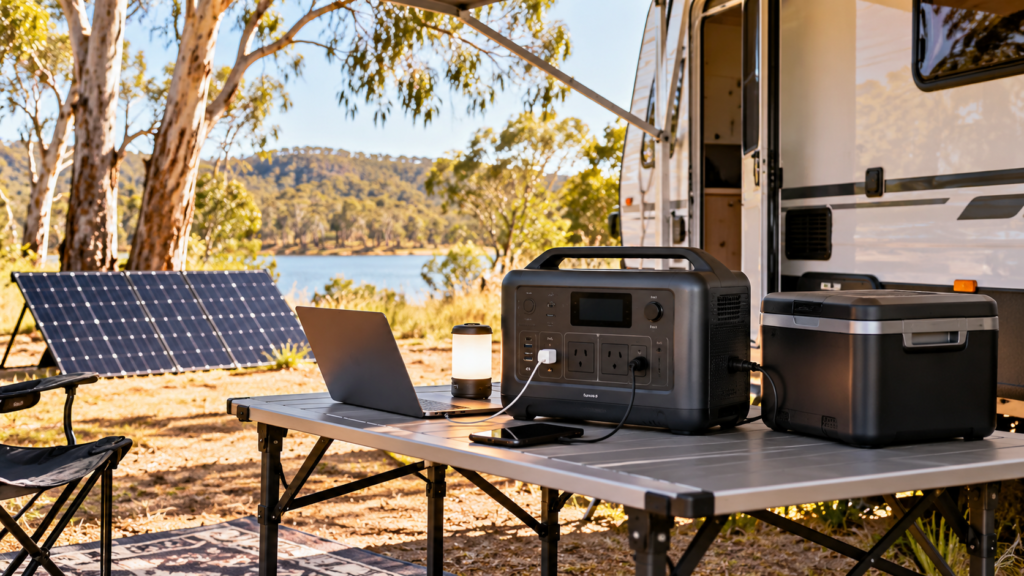
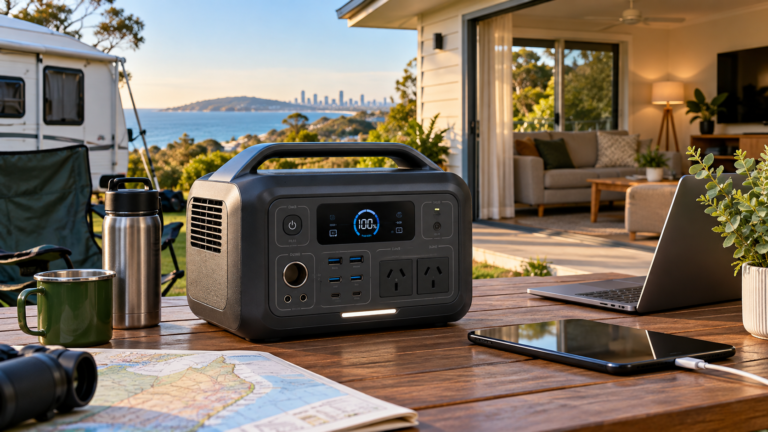
Portable power stations are also commonly used for camping, caravanning and travel. In these situations, portability, battery capacity, charging options and the number of available outputs can all be important.
If you spend several days away from mains electricity, consider how you will recharge the battery and how much energy your equipment uses each day.
Solar charging can be useful for some camping and caravanning setups, but charging performance depends on the solar panels, weather conditions and the power station itself.
See our Camping & Caravan Power guide for more information.
How to Compare Portable Power Stations
When comparing models, look beyond the battery capacity alone. Important specifications include:
- Battery capacity in Wh
- Continuous AC output
- Surge or peak output
- Battery chemistry
- AC charging speed
- Solar charging capability
- Vehicle charging
- Number and type of outputs
- Weight and dimensions
- Warranty
- Expandability
- Display and monitoring features
- Manufacturer support
Portable Power Station Buying Checklist
☐ What appliances or devices will I power?
☐ What is their running wattage?
☐ Do any devices have a high starting/surge requirement?
☐ How many watt-hours do I need?
☐ How long do I need the power station to operate?
☐ Do I need solar charging?
☐ Do I need vehicle charging?
☐ How portable does it need to be?
☐ Which output ports do I need?
☐ Do I need an expandable battery?
☐ What warranty is provided?
☐ Is the manufacturer’s information clear and complete?
Final Thoughts
This portable power station buying guide can help you identify the features and capacity that best match how you plan to use a portable power station.
Start by identifying the devices you need to power, their wattage requirements and how long you need them to operate.
From there, compare battery capacity, continuous and surge output, charging options, portability, battery chemistry and other features that matter for your situation.
Taking the time to work out your requirements before buying can make it easier to compare different power stations and avoid paying for capacity or features you don’t need.