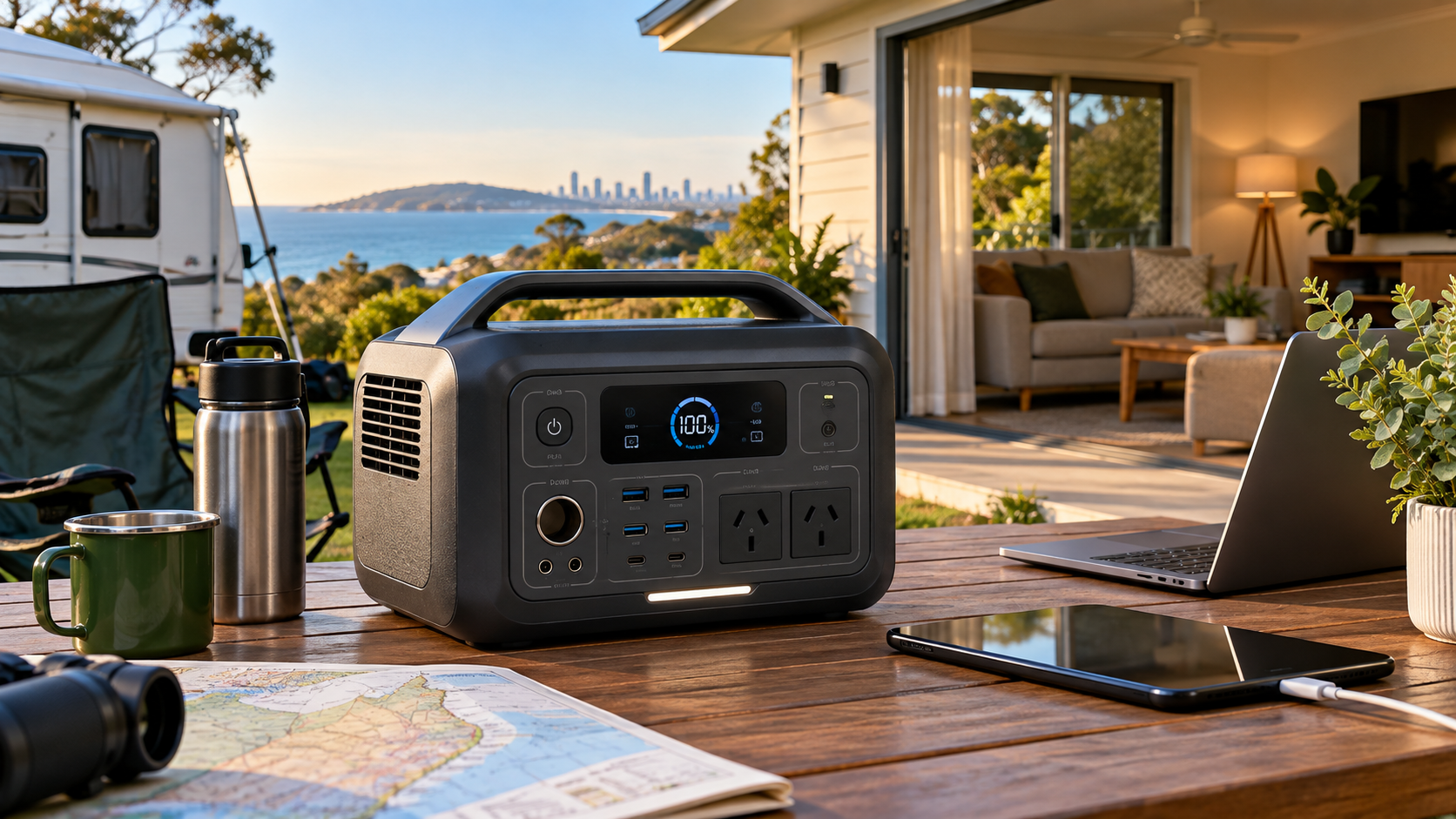
Best Portable Power Stations in Australia
Find the best portable power stations Australia has to offer for home backup, blackouts, camping and everyday use. Compare capacity, output, charging and more to find a power station suited to your needs.
Our Top Portable Power Station Picks for Australia
We’ve selected portable power stations worth considering in Australia across different capacities, uses and budgets. Our comparisons look at battery capacity, continuous power output, surge capability, charging options, portability, expandability and the types of appliances and devices each model can support.
Affiliate disclosure: As an Amazon Associate, Power Backup Central may earn from qualifying purchases.
EcoFlow DELTA 3 Plus — Best Overall Portable Power Station
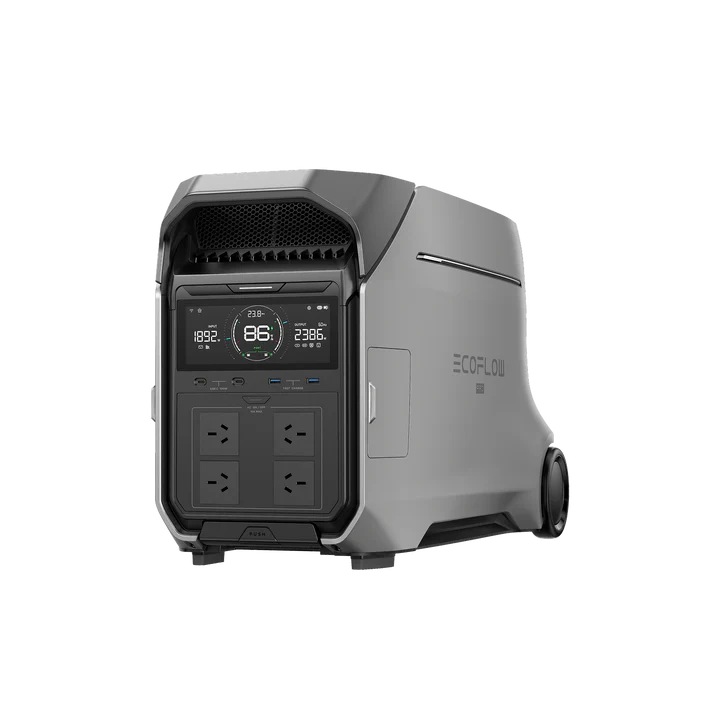
The EcoFlow DELTA 3 Plus is a strong all-round option for Australian households, camping and everyday backup. It combines a 1,024Wh LFP battery with 1,800W of AC output, 3,600W surge capability and up to 1,000W of solar input. It weighs about 12.5kg and can be expanded to up to 5kWh with compatible extra batteries, making it useful when you want a relatively portable power station that can also grow with your needs.
Best for: Home backup, refrigerators, home offices, camping, caravanning and everyday appliances.
Anker SOLIX C1000 — Best Value Compact Portable Power Station
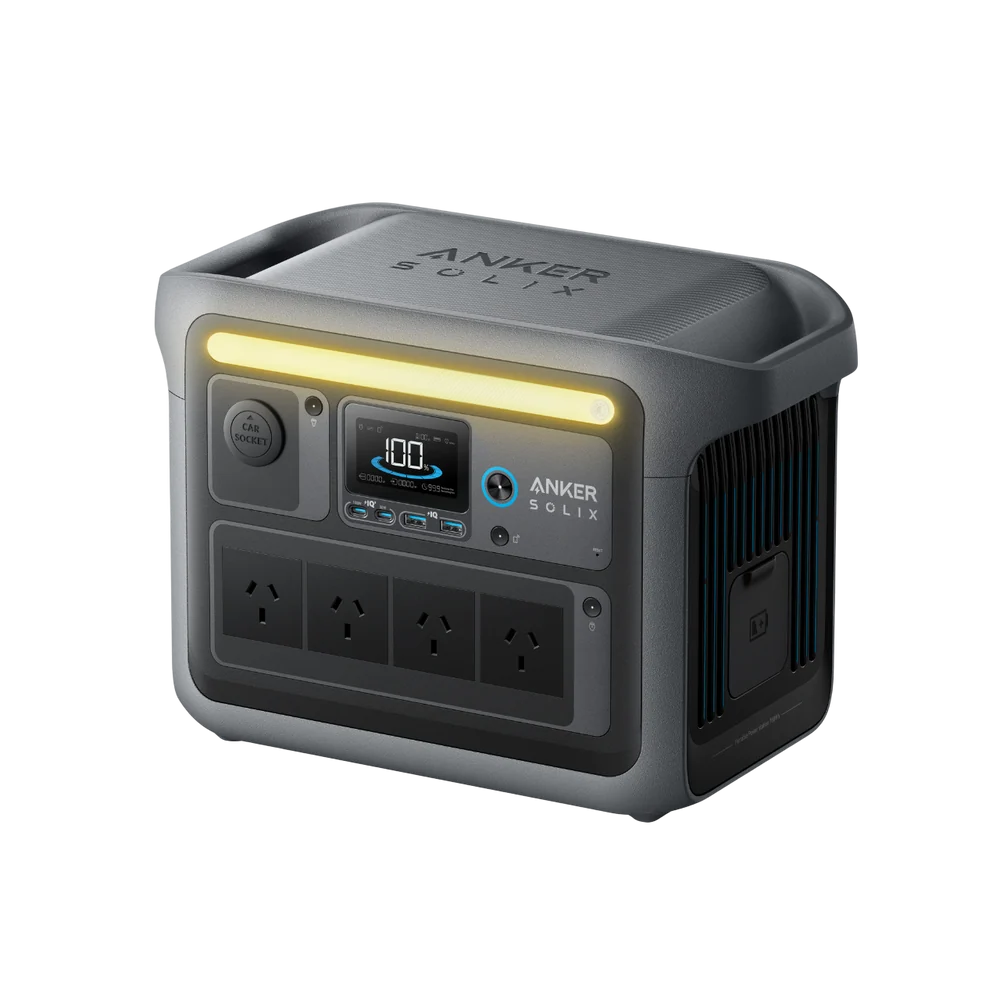
The Anker SOLIX C1000 is a versatile 1,000Wh-class portable power station that offers a strong balance of capacity, output and portability. It has a 1,056Wh LiFePO4 battery, 1,800W of continuous AC output and up to 600W of solar input. It can also be expanded to 2,112Wh with a compatible expansion battery. At about 12.9kg, it remains manageable for camping, caravanning and household backup, while its fast AC charging and UPS capability make it useful for short outages, refrigeration, communications equipment and home-office devices.
Best for: Short blackouts, camping, caravanning, home offices, refrigeration backup and buyers who want expandable 1,000Wh-class storage.
EcoFlow DELTA Pro 3 — Best High-Capacity Home Backup Power Station
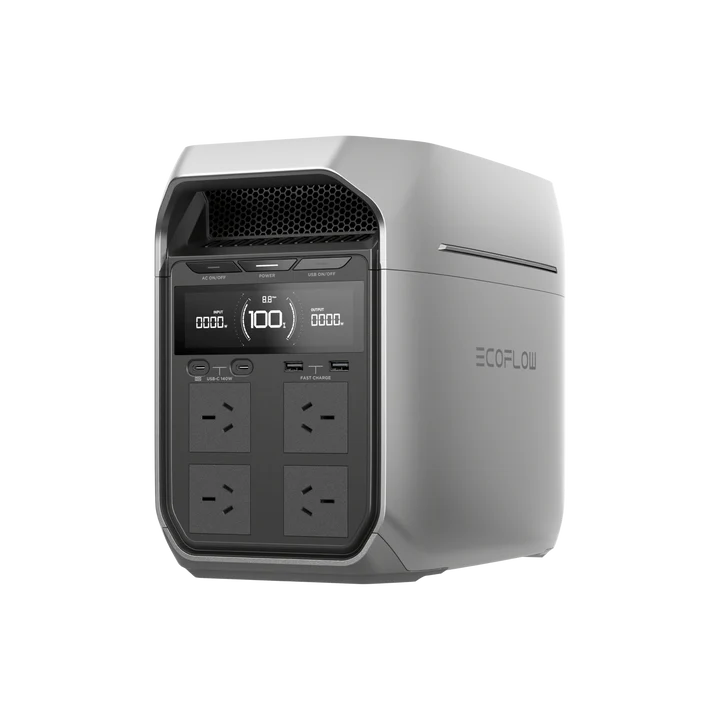
The EcoFlow DELTA Pro 3 is a high-capacity portable power station designed for extended home backup, off-grid use and demanding appliances. The Australian version starts with a 4kWh battery and delivers 4,000W of AC output at 230V. Its capacity can be expanded to up to 12kWh with compatible extra batteries, making it suitable for longer power outages and higher energy needs. It also features a 10ms UPS and can recharge to 80% in around 50 minutes, although its larger size and higher price make it better suited to home backup than everyday portable use.
Best for: Extended home backup, larger appliances, off-grid power and households that need substantially more battery capacity.
DJI Power 2000 — Best High-Output 2,000Wh Portable Power Station
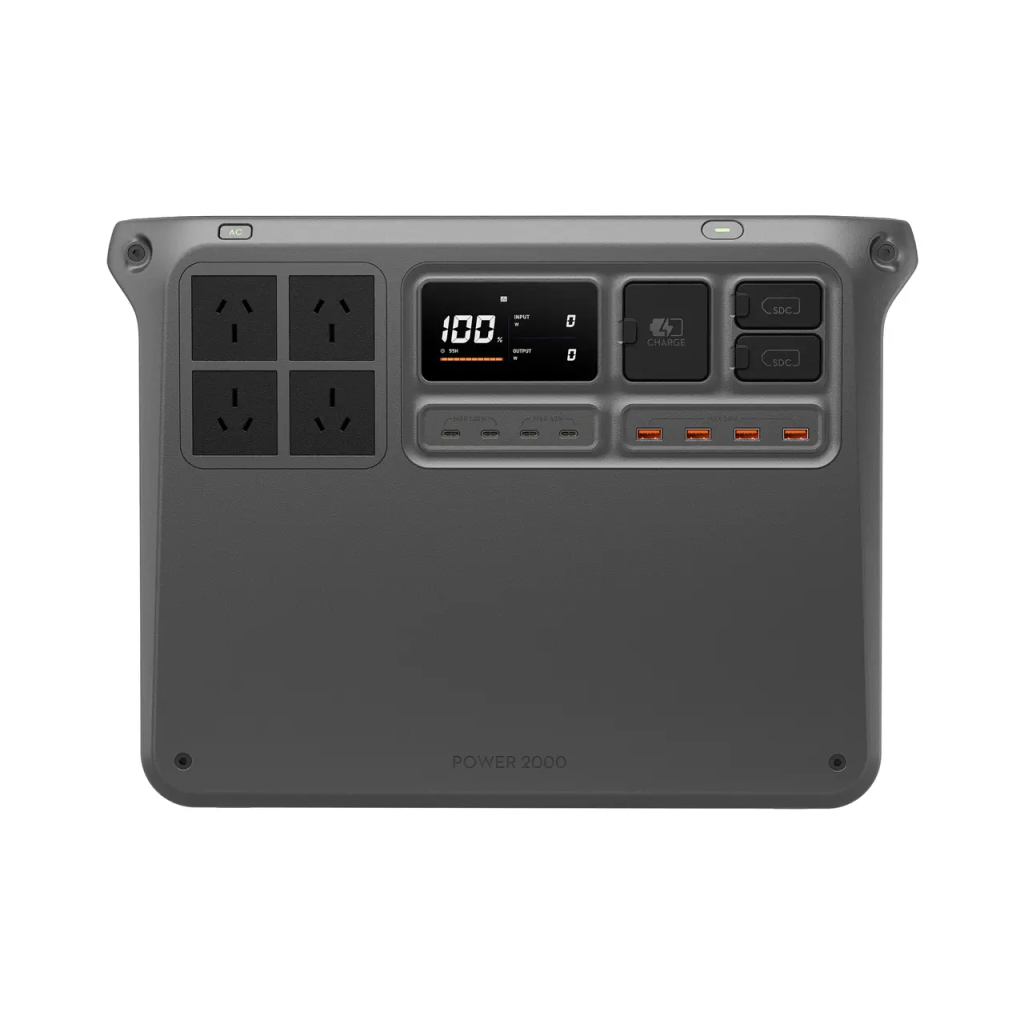
The DJI Power 2000 is a high-output 2,000Wh-class portable power station for Australian buyers who need substantial battery capacity and 3,000W of continuous AC power. It has a 2,048Wh LiFePO4 battery, four AC outlets and multiple USB ports, making it suitable for demanding appliances, home backup, camping, caravanning and mobile work. It can also be expanded with up to 10 DJI Power Expansion Battery 2000 units, providing up to 22,528Wh of total capacity. The Australian version supports fast AC charging, with 0–80% charging taking approximately 45 minutes under the manufacturer’s test conditions.
Best for: Home backup, demanding appliances, camping, caravanning and buyers who want 2,000Wh of capacity with the option to expand substantially.
Jackery Explorer 2000 Plus — Best Expandable Jackery Power Station
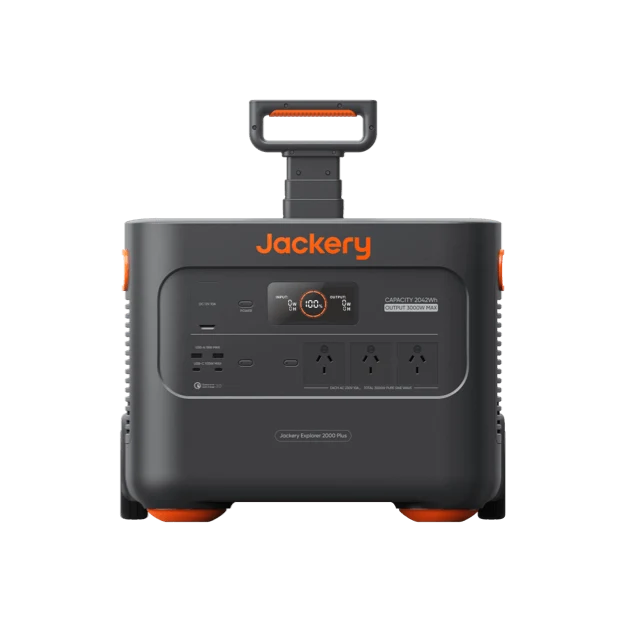
The Jackery Explorer 2000 Plus is a versatile 2,000Wh-class power station for Australian buyers who want strong output with the ability to add more battery capacity later. It has a 2,042Wh LiFePO4 battery and 3,000W of continuous AC output, making it suitable for home backup, camping, caravanning, appliances and mobile work. With compatible expansion batteries, the system can be expanded to up to 12kWh, giving you more flexibility if your power requirements increase. Its combination of capacity, output and expandability makes it a useful option for buyers who want more than a compact power station but don’t need a much larger home backup system.
Best for: Home backup, camping, caravanning and buyers who want 2,000Wh of capacity with the option to expand to a larger system.
BLUETTI Elite 200 V2 — Best Compact 2,000Wh Power Station
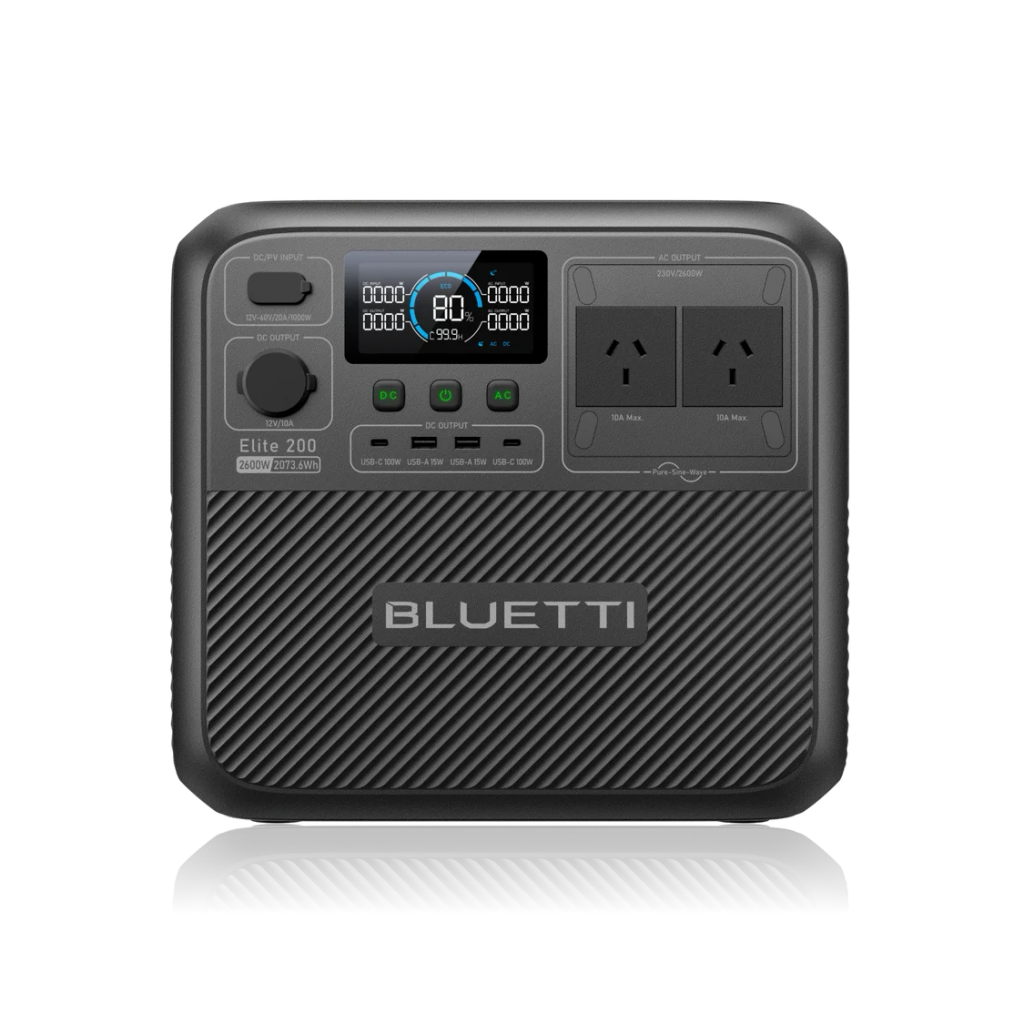
The BLUETTI Elite 200 V2 is a compact 2,000Wh-class power station that combines a 2,073.6Wh battery with 2,600W of continuous output. Its compact design makes it easier to store and transport than many larger power stations, while its high output makes it suitable for home backup, camping, caravanning and off-grid use. BLUETTI says the Elite 200 V2 can reach 80% charge in about 1.1 hours and supports up to seven devices at the same time. Its Power Lifting Mode can also support suitable resistive loads up to 3,900W.
Best for: Buyers wanting around 2,000Wh of capacity with higher output in a relatively compact design for home backup, camping and caravanning.
How to Choose a Portable Power Station in Australia
Choosing the right portable power station depends on how much power you need, which appliances or devices you want to run, how long you need backup power to last and how portable the unit needs to be. Battery capacity, measured in watt-hours (Wh), determines how much energy the power station can store, while its output, measured in watts (W), determines which appliances it can run. Solar and AC charging speeds, battery chemistry, portability and expansion options are also important factors to consider.
Battery Capacity
Battery capacity is measured in watt-hours (Wh). A 1,000Wh power station can provide more stored energy than a 500Wh model, although the actual runtime depends on the power consumption of the device being used. For short outages and essential electronics, around 1,000Wh may be sufficient. A 2,000Wh-class power station provides more flexibility for refrigeration, home-office equipment and longer periods without mains power, while larger expandable systems are better suited to extended backup requirements.
Power Output
Power output is measured in watts (W) and determines how much power the station can supply at one time. Check both the continuous output and the surge capability before choosing a model, particularly if you plan to run appliances with motors or compressors, such as refrigerators. A power station with plenty of battery capacity can still be unsuitable if its inverter cannot provide enough power for the appliance.
Solar Charging
Solar charging can make a portable power station much more useful during extended outages, camping trips and off-grid travel. Check the maximum solar input supported by the power station and make sure your solar panels are compatible with its voltage and connection requirements. Higher solar input can reduce charging time in suitable conditions, but actual charging performance depends on sunlight, panel orientation, temperature and other factors. If you plan to rely heavily on solar charging, compare both the maximum solar input and the availability of compatible panels and cables.
Portability and Weight
Portability is important if you plan to move your power station between rooms, take it camping or store it when it is not needed. Smaller models are generally easier to carry, while larger-capacity units can weigh considerably more. Consider the power station’s weight, handles, wheels and overall dimensions rather than looking at battery capacity alone. A larger model may provide more backup power, but it may not be practical if you need to move it frequently.
Charging Options
Portable power stations can usually be charged from mains power, solar panels or a vehicle, although the available options vary between models. If you expect to use your power station during extended outages, compare how quickly it can recharge and whether solar charging is supported. For camping and caravanning, vehicle and solar charging can be particularly useful. Always check the manufacturer’s specifications for compatible chargers, panels and cables before connecting equipment.
Battery Chemistry and Lifespan
Most of the power stations in this guide use lithium iron phosphate (LiFePO4 or LFP) batteries. LFP batteries are widely used in modern portable power stations because they offer good cycle life and thermal stability. When comparing models, look at the manufacturer’s stated battery cycle rating and warranty as well as the battery capacity. A longer warranty can provide additional reassurance when a power station is intended for regular use.
Australian Power Requirements
Australian households use 230V mains electricity, so it is important to choose an Australian-compatible power station rather than relying on specifications for models sold in other markets. Product names can be identical across countries while the electrical configuration, outlets and charging equipment differ. Always check that the specific Australian version provides the voltage, outlets and power capacity required for your appliances. For fixed household electrical connections or transfer equipment, consult a qualified electrician rather than attempting to connect a portable power station directly to household wiring.
Which Size Portable Power Station Do I Need?
The right size portable power station depends on what you want to run and how long you need it to operate. A smaller 500–1,000Wh unit may be enough for phones, laptops, lights, Wi-Fi equipment and other essential electronics. Around 1,000–2,000Wh provides more flexibility for refrigerators, home offices, CPAP machines and other essential appliances, while larger 2,000Wh+ systems are better suited to longer outages, higher-power appliances and extended off-grid use. Remember that usable runtime depends on the appliance’s power consumption, inverter efficiency and other factors.
500–1,000Wh: Compact Backup Power
Power stations in this range are generally best for smaller devices and short-duration backup. They can be useful for phones, tablets, laptops, lights, routers, Wi-Fi equipment and other low-power electronics. Their smaller size and lighter weight also make them attractive for camping, day trips and situations where portability is more important than extended runtime.
1,000–2,000Wh: The Versatile Range
A 1,000–2,000Wh power station offers a useful balance between capacity, portability and capability. Models in this range can be suitable for refrigerators, home-office equipment, CPAP machines, entertainment devices and a variety of camping or caravanning equipment, provided the power station has sufficient output for the appliance. For many households wanting backup for essential devices during shorter outages, this range is a practical place to start.
2,000Wh+: Extended Backup Power
Power stations with more than 2,000Wh of capacity are better suited to longer outages and situations where you need to run several devices or higher-power appliances. Larger systems can also offer greater expansion potential, allowing additional batteries to be added as your energy requirements increase. However, they are usually heavier, more expensive and less convenient to move than smaller portable power stations.
What Can a Portable Power Station Run?
A portable power station can run many household appliances, electronics and camping devices, but the actual capability depends on both the station’s battery capacity and its maximum power output. Before connecting an appliance, check its running wattage and, where applicable, its starting or surge power. Remember that high-wattage appliances can drain the battery quickly, even when the power station is capable of running them.
Refrigerators and Freezers
Refrigerators and freezers are common appliances to consider for blackout backup because they cycle on and off rather than running continuously. A power station with around 1,000Wh or more of capacity can be a useful starting point, but the required inverter output and actual runtime depend on the refrigerator. Larger-capacity models provide more reserve energy for longer outages. Allow for compressor starting power and check the appliance and power station specifications before relying on a particular combination.
Home Office and Wi-Fi Equipment
A portable power station can provide useful backup for laptops, monitors, routers, NBN equipment and other home-office devices during an outage. These devices generally use less power than heating or cooking appliances, so even a relatively compact power station can provide several hours of backup depending on the equipment connected. Keeping your internet and essential work equipment powered can be one of the most practical uses for a smaller power station.
CPAP Machines
Portable power stations can provide backup power for CPAP machines during blackouts, camping trips and travel. The required capacity varies depending on the CPAP model, pressure settings and whether features such as heated humidification are being used. Check the manufacturer’s power requirements and allow additional capacity if you need the machine to operate for an extended period.
Coffee Makers and Kettles
Coffee makers, kettles and other heating appliances can require considerably more power than electronics such as laptops or phones. Many models can draw well over 1,000W while operating, so check the power station’s continuous output before connecting them. Because heating appliances consume energy quickly, a larger battery may also be needed if you want to use them repeatedly during an outage. For occasional use, a power station with sufficient output and capacity can provide a convenient alternative to mains electricity.
Microwaves and Other High-Power Appliances
Microwaves, toaster ovens, induction cooktops and other high-power appliances can place a significant demand on a portable power station. Check both the appliance’s rated wattage and the power station’s continuous and surge output before use. Even when a power station can run a high-wattage appliance, the battery may be depleted relatively quickly. Larger-capacity models with higher inverter output are generally more appropriate for these applications.
Camping and Caravanning Equipment
Portable power stations are particularly useful for camping and caravanning because they can provide electricity away from mains power. Depending on the model, they can support lighting, phones, laptops, portable refrigerators, cooking equipment and other travel essentials. Weight, available outlets, solar charging capability and vehicle-charging options become especially important when choosing a power station for travel.
Important: Check Appliance Requirements
Appliance power requirements can vary considerably between models, so never assume that a particular power station will run an appliance simply because the battery capacity appears sufficient. Check the appliance’s running wattage, starting or surge requirements where applicable, and the power station’s maximum continuous and peak output. For household electrical installations or equipment that requires fixed wiring, seek advice from a qualified electrician.
How Long Will a Portable Power Station Run?
Runtime depends on the power station’s battery capacity, the amount of power being used and the efficiency of the inverter. A simple way to estimate runtime is to divide the battery capacity in watt-hours by the appliance’s power consumption in watts, then allow for energy lost through the inverter and other system components. Actual runtime will vary, so treat calculations as estimates rather than guarantees.
Example: 1,000Wh Power Station
A 1,000Wh power station does not normally provide 1,000Wh of usable energy at the appliance because some energy is lost during conversion. For example, an appliance drawing 100W could theoretically use 1,000Wh in 10 hours, but the actual runtime will be shorter after accounting for conversion losses and the power station’s operating limits. Lower-power devices will generally run for longer than high-power appliances.
Example: 2,000Wh Power Station
A 2,000Wh power station provides roughly twice the stored energy of a 1,000Wh model, although actual usable energy and runtime will vary. As a simple illustration, a 100W load could theoretically consume 2,000Wh over 20 hours before losses. A refrigerator, however, does not normally draw its maximum rated power continuously because its compressor cycles on and off, so actual runtime can be quite different.
How to Estimate Your Runtime
To estimate runtime, start with the power station’s capacity in watt-hours and the appliance’s typical power consumption. Divide the capacity by the appliance’s wattage to get a theoretical runtime, then reduce the result to allow for conversion losses and other factors. For example, a 2,000Wh power station supplying a continuous 200W load has a theoretical runtime of 10 hours before losses. Actual runtime will be shorter.
Portable Power Stations for Home Backup
A portable power station can provide useful backup electricity during a blackout, but it is important to decide which appliances and devices you actually need to keep running. Instead of trying to power an entire home, many households use a portable power station for essential loads such as a refrigerator, internet equipment, lighting, phones, laptops and selected medical devices. Larger expandable systems can provide substantially more capacity, but they also cost more and are heavier to move.
Backup Power for Essential Appliances
For a short power outage, concentrating on essential appliances can make a portable power station much more useful. A refrigerator, freezer, Wi-Fi equipment, lighting and communication devices may be higher priorities than appliances such as ovens, electric heaters or other high-power equipment. Make a list of the appliances you would need during an outage and check their power requirements before choosing a power station.
Can a Portable Power Station Power Your Whole House?
Some larger portable power stations can provide substantial backup power, but a portable unit should not be treated as a simple replacement for a permanently installed home backup system. Whether a power station can supply particular household circuits depends on its output, the home’s electrical configuration and the equipment used to connect it. Never connect a portable power station to household wiring by plugging it into a wall outlet or attempting to backfeed the electrical system. If you want backup power connected to household circuits, consult a qualified electrician about the appropriate equipment and installation.
Home Backup During Longer Outages
For longer outages, battery capacity and the ability to recharge become increasingly important. A larger power station can provide more stored energy, while solar panels or other compatible charging methods can help replenish the battery when mains electricity is unavailable. If extended backup is a priority, consider an expandable model and plan which appliances will be used, when they will be used and how the system will be recharged.
Solar Backup During Power Outages
One of the biggest advantages of a portable power station is the ability to recharge it from solar panels when mains electricity is unavailable. This can make a battery system much more useful during a prolonged outage, particularly when power may be unavailable for more than a day. Solar charging will not always replace the energy used by your appliances, however, so consider your daily electricity requirements, available sunlight and the power station’s maximum solar input when planning backup power.
How Much Solar Power Do You Need?
The amount of solar input you need depends on how much electricity you expect to use and how quickly you want to recharge the battery. A higher maximum solar input can reduce charging time when conditions are suitable, but the power station will only accept the amount of solar energy it is designed to handle. Check the manufacturer’s specifications for the permitted solar-panel voltage, current and maximum input before connecting panels.
Solar Charging in Australian Conditions
Solar generation varies throughout Australia and can change significantly with weather, season, shade and panel positioning. Treat the manufacturer’s maximum solar-input figure as a best-case specification rather than an amount you will necessarily achieve every day. For emergency backup, it is sensible to have another charging option available, such as mains or compatible vehicle charging, rather than relying entirely on solar.
Using a Portable Power Station During a Blackout
A portable power station can be particularly useful during a blackout because it provides stored electricity without requiring fuel or a generator. For short outages, it can keep essential devices such as phones, lights, Wi-Fi equipment, laptops and refrigerators operating. Before an outage occurs, charge the power station fully and make sure you know which appliances you intend to connect. Keeping compatible charging cables and adapters together with the power station can also make it easier to use when mains power is unavailable.
What to Keep Ready for a Power Outage
If you are purchasing a power station for emergency backup, it is worth preparing it before you actually need it. Keep the battery charged according to the manufacturer’s recommendations and store the required cables and accessories where they are easy to find. Make a list of your essential appliances and devices, check their power requirements and decide which ones will have priority if the power goes out. Periodically check the power station and accessories to make sure everything remains ready for use.
Portable Power Stations vs Generators
Portable power stations and fuel-powered generators provide backup electricity in different ways. A power station stores electricity in a battery and can usually operate quietly without producing exhaust fumes, making it convenient for use inside appropriate areas of a home. Generators produce electricity from fuel and can provide longer-running power when fuel is available, but they require outdoor operation and appropriate safety precautions. The better choice depends on your power requirements, expected outage duration, portability needs and how you intend to use the system.
Portable Power Station Comparison
The models below cover different needs, from compact backup power to larger systems designed for extended home backup. Specifications and availability can change, so check the manufacturer’s current Australian listing before purchasing.
| Portable Power Station | Capacity | Continuous Output | Max Solar Input | Best For |
|---|---|---|---|---|
| EcoFlow DELTA 3 Plus | 1,024Wh | 1,800W | 1,000W | Overall winner for most Australian homes. |
| Anker SOLIX C1000 | 1,056Wh | 1,800W | 600W | Best value compact |
| DJI Power 2000 | 2,048Wh | 3,000W | Up to 1,800W* | Fast charging and expandable home backup. |
| Jackery Explorer 2000 Plus | 2,042.8Wh | 3,000W | Up to 1,400W | Expandable camping and off-grid use. |
| BLUETTI Elite 200 V2 | 2,073.6Wh | 2,600W | 1,000W | Compact high-output 2,000Wh option. |
| EcoFlow DELTA Pro 3 | 4,096Wh | 4,000W | 2,600W | High-capacity home backup and extended outages. |
DJI Power 2000 can support up to 1,800W solar charging when used with the compatible DJI Power 1.8kW Solar/Car Super Fast Charger, which is sold separately.
How We Choose Portable Power Stations
We compare portable power stations using published specifications such as battery capacity, continuous AC output, surge capability, charging options, solar input, portability, expandability and intended use. Product specifications and availability can change, so check the manufacturer’s current Australian listing before purchasing.
Frequently Asked Questions
What size portable power station do I need in Australia?
For basic emergency power, a 500–1,000Wh power station may be enough for phones, lighting, communications equipment and selected small appliances. A 1,000–2,000Wh model provides a more useful balance for refrigerators, home-office equipment, CPAP machines and longer outages. Larger 2,000Wh-plus systems are better suited to extended backup and higher energy requirements.
Can a portable power station run a refrigerator?
Yes, provided the power station has sufficient continuous and surge output and enough usable battery capacity. Refrigerator compressors can require a higher starting surge than their normal running consumption, so check both requirements before buying.
Can a portable power station power a whole house?
Usually not by simply plugging it into a wall outlet. Portable power stations are generally best used for selected appliances and essential loads. Connecting a battery system to household circuits requires compatible equipment and, where applicable, installation by a qualified electrician. Never backfeed household wiring through a standard outlet.
Are portable power stations worth buying in Australia?
They can be particularly useful for short blackouts, camping, caravanning, remote work and keeping essential appliances or communications equipment running. The right choice depends on the appliances you need to operate, required runtime, recharge options and how portable the unit needs to be.
Are portable power stations better than generators?
They have different strengths. Battery power stations are quiet and produce no exhaust at the point of use, making them useful for indoor emergency backup and electronics. Fuel generators can provide longer-duration power when fuel is available but must be operated safely outdoors.
Final Verdict
The best portable power station in Australia depends on what you need to run, how long you need it to operate and how easily you need to move it.
For most households looking for a versatile combination of capacity, output and portability, the EcoFlow DELTA 3 Plus is a strong all-round choice. The Anker SOLIX C1000 is an attractive lower-capacity alternative, particularly for buyers who value portability and expandable storage.
For buyers who need around 2,000Wh of storage and higher output, the DJI Power 2000, Jackery Explorer 2000 Plus and BLUETTI Elite 200 V2 offer different combinations of output, portability and expansion.
If you need substantially more battery capacity for extended backup, the EcoFlow DELTA Pro 3 moves into a different class of system.
Before buying, check your appliance running and starting requirements, calculate the battery capacity you actually need and confirm the Australian version, outlets, charging equipment and current availability.